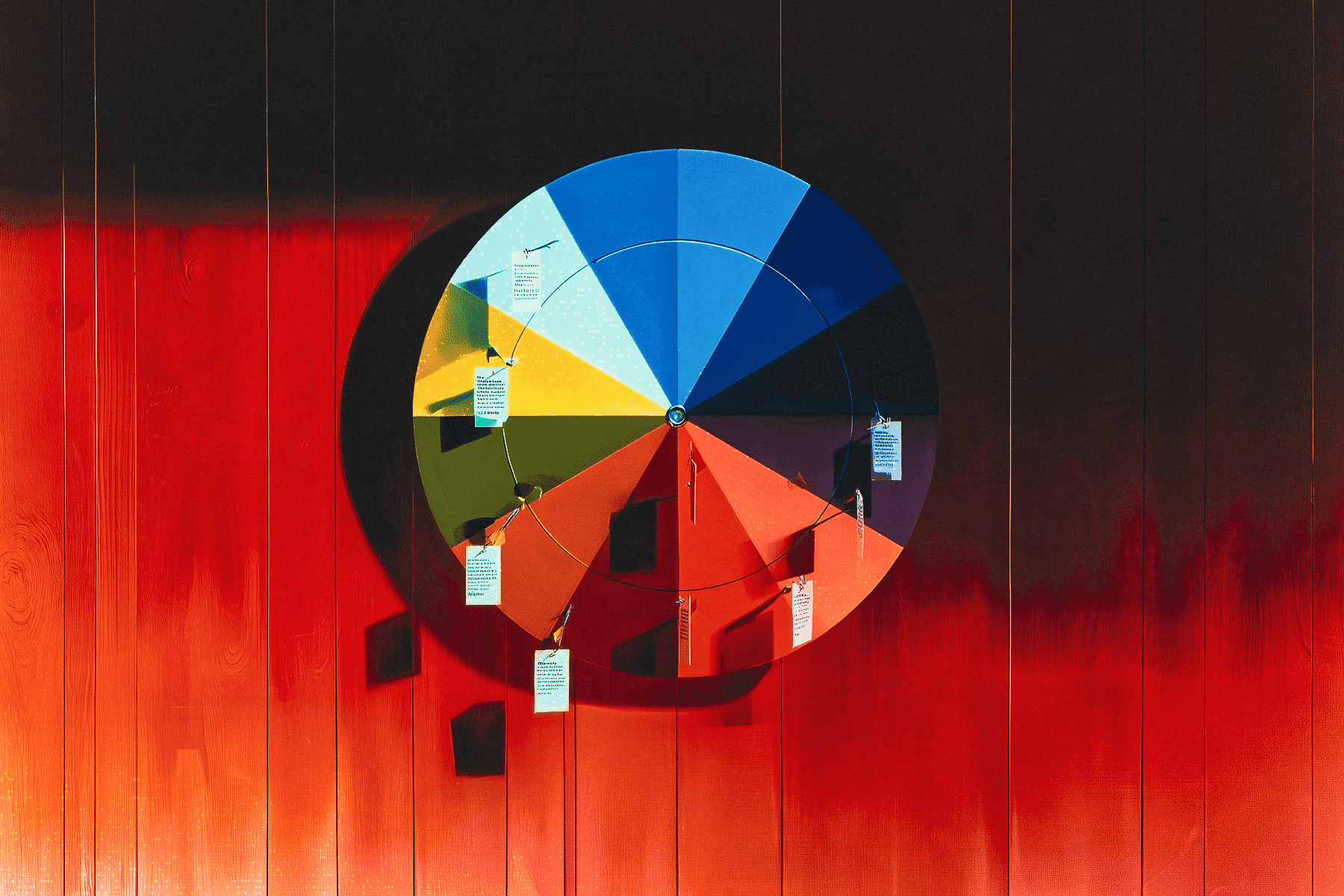
Agentic systems record design reasoning
In today’s newsletter, I’ve got a lot of great content for you, including:
- Real glass refraction and chromatic edges for the web
- Why Meta’s Muse feels simpler than ChatGPT and Claude
- How agentic systems are the future of brands
- And 8 more
Most Interesting
Agentic systems are the future of brands
Little Plains says static brand guidelines can’t keep up once teams and AI agents ship faster. Their fix is an agentic brand system that records the reasoning behind each design decision, so people and agents stop guessing and the work stays on brand.
Design + Development
Amazing-glass: Apple’s Liquid Glass for the web, with real refraction
A web component library that recreates Apple’s Liquid Glass with real refraction, curved rims, and chromatic edges, tuned pixel-by-pixel against SwiftUI’s glassEffect. Interactive controls, merging shapes, typed React and Vue wrappers. One CSS file, one script.
Prettier loading screens can make the wait longer
Marcin Wichary traces loading screens from ZX Spectrum cassette title cards to Figma and Gmail. His point stings a little: the nicer you make a wait feel, the less pressure anyone feels to make it shorter.
How to make your design system AI-ready
AI prototypes drift because your design system leaves room to guess. Hardik Pandya removes it: Markdown specs, a closed token layer, and scripts that catch hard-coded values. Vitaly Friedman walks through it with Atlassian and Carbon examples. <
Tech + Innovation
AI models are becoming commodities. Owning the interface still pays
Tomasz Tunguz’s read: AI models are becoming commodities. Prices dropped 41% while token usage climbed 50%. Labs can still win share by reselling other models, owning the user interface, and using routing data to cut future training costs.
A developer is using AI to build free, open source Adobe clones
A developer is using AI coding tools to rebuild Adobe apps like Filmcraft as free, open source clones, paid for by selling AI model access. His claim: anyone can now rebuild paid software. Copying Adobe’s interface carries real legal risk, though.
Apple’s new CEO John Ternus is in the design studio several times a week
Per Mark Gurman, new Apple CEO John Ternus visits the design studio several times a week. Tim Cook gave it an hour a month. Ternus is handing finance and operations to other execs so he can focus on industrial and interface design.
Stuff, a to-do app that splits planned dates from deadlines
Stuff is a to-do app for iPhone, iPad, and Mac that splits planned dates from deadlines. Lists group into Spaces, shared lists work for households, and an Adventure Log shows what you finished any day. Free, with paid extras from a solo developer.
Work + Mindset
Chat is AI’s terminal era, and Amelia Wattenberger wants out. She pulls from Sketchpad, VisiCalc, and Xerox Star to show what’s next: direct manipulation, live editing, and visible state, so AI tools feel like handling real objects instead of typing commands.
Matt Downey is a designer who has spent over two decades building digital businesses, now Head of Design at Atlas UP. He writes Digital Native, the newsletter for designers building in the AI era.