
Know, like, and trust: Sell more by building better relationships
Think about the last time you were standing in a grocery aisle trying to pick between two brands of peanut butter. Or dish soap. Or toilet paper. Something drove that decision, and it probably wasn’t the nutrition label. More likely, you just trusted one brand more than the other. You knew it. You liked it. So you grabbed it and moved on.
Brand recognition comes easy when you’ve got millions to blow on Super Bowl commercials. But for solopreneurs trying to sell digital products, you can’t really buy your way into people’s heads. You have to earn it.
I want to break down how you can expand your reach as a digital business owner and get people to know you, like you, and trust you, so you can connect your products to the people who’d actually find them useful.
Step 1: People need to know you
I’ll state the obvious here: if nobody knows about you, you’re going to have a really hard time selling anything. But being “known” isn’t just about name recognition. It’s about being memorable, with a mix of expertise and approachability that makes people want to pay attention.
The first step to creating a personal brand people care about is increasing your visibility and putting your thoughts and ideas out into the world. That means social media.
If you want people to get to know you, the fastest path is through the network effects of social media. It doesn’t matter if you choose Instagram, TikTok, Facebook, or Twitter/X (my drug of choice). You just need to make sure your ideal audience is actually there and active.
Once you’ve planted your flag, share your passions, expertise, and hard-earned perspective while you’re developing your product and business. “Building in public” tends to attract like-minded people (and potential customers), so share early and share often. You might be surprised by how much attention you stir up.
One last thought on picking a platform
The medium of the message matters. Different platforms work better for different types of content.
Instagram and TikTok are great for visual storytelling, showing off products with engaging videos, and capturing the feel of your brand. Twitter/X and Facebook are better for text-based content, discussions, and telling stories that connect with people on a deeper level.
Pick a platform that reaches your ideal audience and fits how you want to present your products.
Ok, now, really, one last thought about picking a platform
Don’t forget that your social profiles live on rented land, and the owner of that land can change their algorithm at any moment without warning. Once you’ve established yourself, do what you can to de-platform people and get them on a newsletter list. It’s far more stable and will help you form genuine relationships with the people you’re trying to serve.
Step 2: Creating likability
At this point, your audience has noticed you. But why should they remember you? The second stage in building better relationships is about turning casual observers into fans who genuinely like you.
To do that, you need to connect with your audience on a personal level through content that’s relatable and reflects who you actually are. Don’t just inform, entertain and engage too.
Tell stories and show your personality
Consider sharing stories or anecdotes about common experiences or challenges in your niche. This builds a bridge between you and your potential customers, and it leads to a stronger connection with you and your brand.
And don’t be afraid to let your personality come through. Show the creativity and strategic thinking it took to build your product(s) and business. Whether it’s your sense of humor or your passion for creation, that personal touch makes your audience feel like they actually know you.
Speaking of connecting on a deeper level, building and engaging in community at this stage is a great way to increase your likability. It’s a chance to invite your audience into your world, encourage real exchange, and build something based on mutual respect and trust (which we’ll get into next).
Step 3: Establishing trust
Trust is the foundation of any successful business relationship. But of the three factors (know, like, and trust), it’s by far the hardest to earn and the easiest to lose.
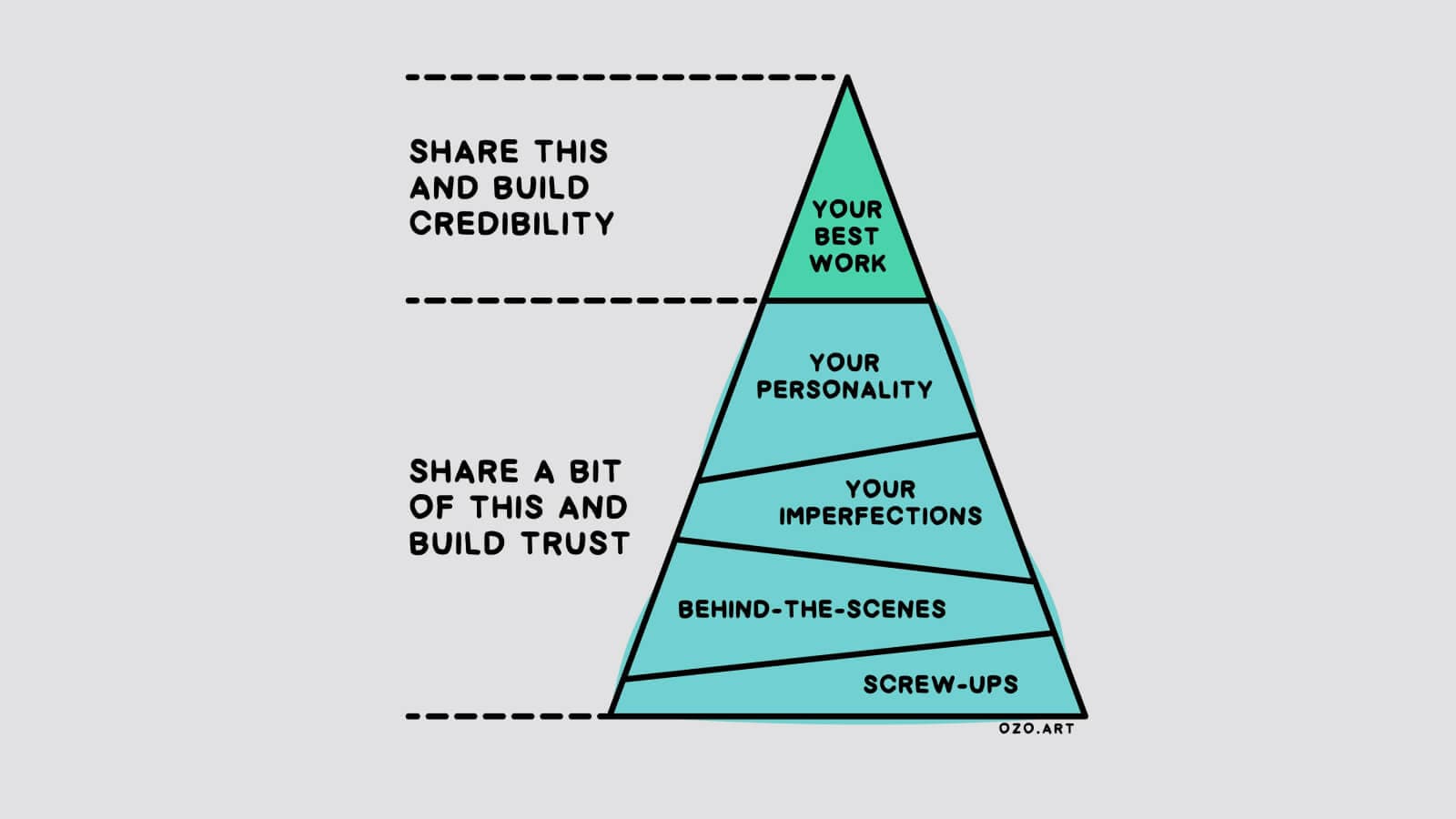
Trust can be earned in a number of ways, but transparency and vulnerability are at the top of the list. When you’re open and honest about your product, your practices, your successes, and your failures, you’ll draw in more people and make them want to stick around.
Another way to earn trust (and I do mean earn, it’s never given) is to just be human. I’m sure you’ve seen this quote before, but it’s worth repeating:
“Be yourself; everyone else is taken.” (Oscar Wilde).
Share your journey, the challenges, and how you overcame them. It sets a foundation of trust and gives authenticity to your story and products.
“Earn trust, earn trust, earn trust. Then you can worry about the rest.” (Seth Godin).
Once you’ve built that trust, ask people to talk about you and your products. Collect social proof through testimonials and let others do the selling. People buy from other people, and word of mouth is still the most persuasive form of advertising.
Build it one step at a time
Building a “know, like, and trust” factor is one of the best ways to build better relationships and sell more products. Start by getting visible and putting your ideas out there. Then create content that’s relatable and resonates on a personal level. And finally, share your journey, the challenges, all of it. That’s what builds trust and gives authenticity to you and your products.
It’s not easy, but it is simple. Now get out there and get known.
Matt Downey is a designer who has spent over two decades building digital businesses, now Head of Design at Atlas UP. He writes Digital Native, the newsletter for designers building in the AI era.