Design, AI, and brand building
This week is all about how clarity shapes what people actually believe. We’ve got 11 articles, including:
- How Zohran Mamdani’s bright yellow bodega aesthetic made political ideology feel tangible instead of theoretical.
- Why misalignment, not exhaustion, is what actually drives burnout when your values stay fuzzy.
- What a Midwest archival team preserved shows how intentional curation shapes how legacy gets understood.
- And more…
Most Interesting
How Superhuman, Grammarly, and Coda built their brands
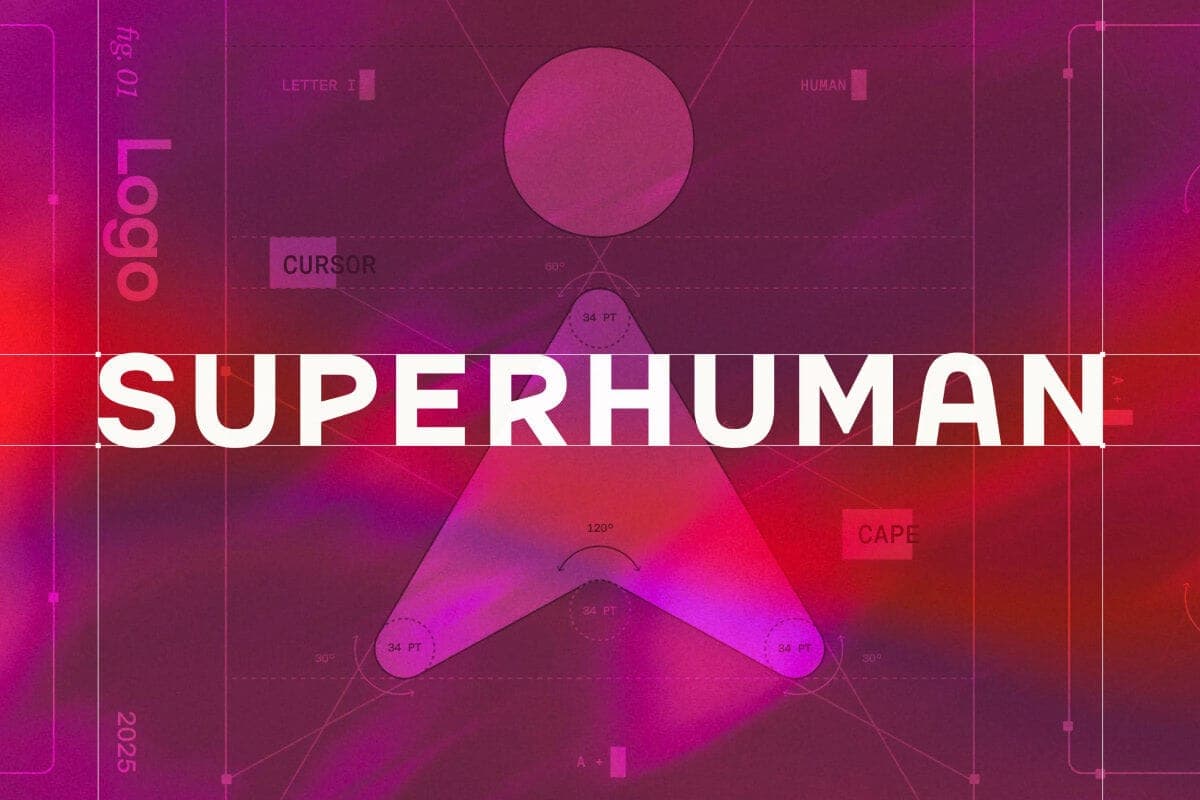
Superhuman’s rebrand started with a doodled cursor that looked like a cape, then evolved into a full motion-driven identity system. The team built custom Figma plugins (Superdots, Superflow) to generate branded textures at scale, and created a 5-layer marketing framework that visualizes the writing process itself. This article gives a rare look at how a design system actually gets built when the brand needs to move as fast as the product.
Design + Development
Design actually mattered for Zohran
Zohran Mamdani’s NYC mayoral campaign ditched red-white-blue for bright yellow and bodega aesthetics, making democratic-socialist politics feel like home instead of radical.
Springs and bounces in native CSS
Josh Comeau shows how CSS linear() timing functions can now handle spring physics with 40-50+ points instead of reaching for JavaScript. Not quite like the real thing, but close enough for most interactions.
Inside the top secret Virgil Abloh archive
In the years since the premature death of the former Off-White and Louis Vuitton creative director, a small team of Midwest archivists has tirelessly—and very quietly—tracked down and catalogued one of the most remarkable private fashion collections ever assembled.
Neuething’s variable type family
Neuething Sans ships with 30 styles and variable width and weight controls. You can dial in everything from SemiExpanded to UltraExpanded without swapping files. It’s the kind of type system that actually gives you flexibility without needing a dozen separate font families cluttering your design files.
Tech + Innovation
Some concepts are easy to grasp in the abstract. Boiling water: apply heat and wait. Others you really need to try. You only think you understand how a bicycle works, until you learn to ride one.
Figma Weave: Designing with AI, not around it
Figma bought Weavy because AI alone (currently) ships rough work. The node-based editor that lets you branch outputs, layer in pro tools like masking and color work, and pick the right model for each job.
Designing with vibes: What Cursor taught me
Vibe coding with tools like Cursor is replacing Figma for prototyping. The practices that work are specific: Git commits for version control, upfront taxonomy to cut AI hallucination by 70%, treating code like frames. One builder shipped an entire product experience for $2-4k in tokens across 60 hours. No design tools opened.
Work + Mindset
Why I run design tests one at a time
Comparative testing sounds smart but, you need triple the people, results get messy when users see multiple versions, and you still can’t tell which parts actually worked. Adam Silver says the better move is to ship one solid design, watch where it breaks in real use, then iterate with clarity instead of running expensive A/B tests that probably don’t prove anything.
How to define your core values
Your core values work like guardrails. They don’t dictate every turn, but they keep you from veering off course. When you’re clear on what actually matters to you, the career confusion and imposter syndrome quiet down. Most burnout isn’t exhaustion. It’s misalignment.
Jinna learns your business inside out—your clients, your cash flow, how you talk. Then it handles the admin work like drafting invoices, chasing down payments, scheduling follow-ups. The more you use it, the smarter it gets.
Matt Downey is a designer who has spent over two decades building digital businesses, now Head of Design at Atlas UP. He writes Digital Native, the newsletter for designers building in the AI era.
Keep reading
Design systems are now infrastructure for AI
Edition #162
Design systems, AI tools, and the new process
Edition #142
Chat becomes the interface
Edition #174
AI design & technical tools
Edition #122
Intelligence, simplicity, and creative systems
Edition #125
When systems think without designers
Edition #159